Through 2024 (and now into 2025-26), AIM delivered the Connected Communities programme, part of the DCMS Know Your Neighbourhood fund.
This programme was designed to help museums both tackle chronic loneliness through their activities and to improve access to high-quality volunteering. As well as distributing grants totalling nearly £700,000, there was supporting capacity building programme, which I was a part of.
As the project support officer and legacy manager (the latter role co-delivered with Sophina Jagot), I witnessed each of the grant-awarded museums really strive to deliver outreach, programming and initiatives that were ambitious and impactful. Each worked with one, often several, partners to reach their most vulnerable and isolated communities, co-creating activities and supporting systems that were truly inclusive. It is not hyperbole to say these were projects that had a profound mpact not only on participants but on the organisations as well.
Part of my role was to create two new success guides on those themes: tackling chronic loneliness through your organisation’s activities, and improving access to high-quality volunteering.
If, like me, you have known and interacted with AIM for some time (my first involvement with AIM was 12 years ago, when I received an AIM Higher grant for some fundraising advice!), you’ll be very familiar with their success guides. The range is astonishing – from interpretation to audiences, from collections care to business planning – all written by experts in their field. Each one is free to download and access at any time.
And now, my writing joins the resource family! On 27th August, the Connected Communities success guides, written by me, were published and released to the world. There are contributions from Ingrid Abreu-Scherer, Jenni Waugh and Sophina Jagot, case studies, exercises to work through in your teams and links to further resources. There are also two accompanying videos where the toolkits are broken down for those who struggle with the written word.
You can access the guides and videos via this link. I hope you find them useful.
This year has been one for project culmination so far. As well as the Everything to Everybody project reaching conclusion, Wolverhampton Arts and Culture completed their Esme Fairbairn Foundation-funded Living with Difference project, and Tudor House Museum came to the end of their Covid-impacted, ACE funded Bedfellows project.
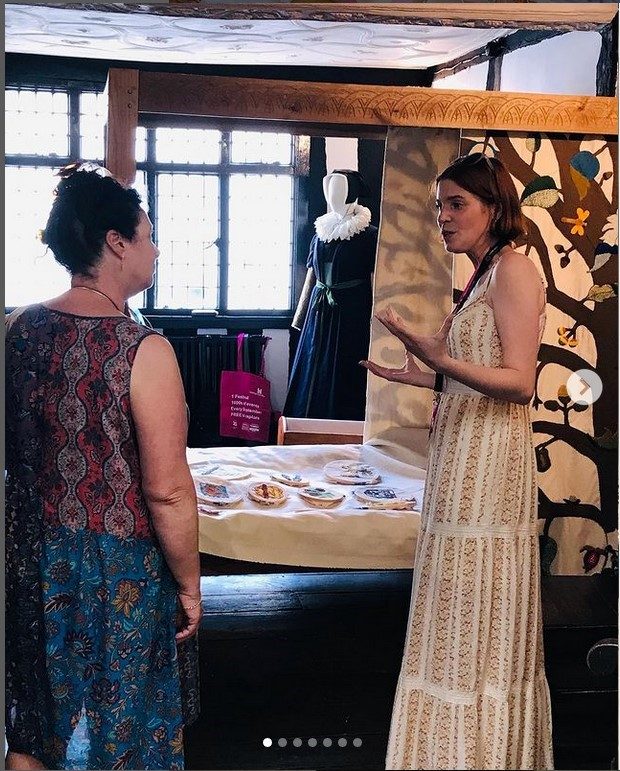
The latter was a textile-based project that brought together a team of volunteers from all walks of life to create a counterpane and set of curtains to dress the four-poster bed in the ‘Best Room’ in the museum. Led by an experienced textile artist, the project would explore 16th Century embroidery techniques and themes to design and hand stitch the appliques and base designs.
Seriously impacted by Covid and team changes, the team nonetheless managed to keep stitching, attracting new volunteers along the way. At every possible opportunity, the volunteers talked to visitors about the project and demonstrated their newly-acquired skills in the museum.
In March 2024, the counterpane and bed curtains were permanently installed in the museum, a testament to the hard work, dedication and thousands of hours of stitchingof the volunteers.
Wolverhampton Art and Culture started a very ambitious project to decolonise their collection in 2021. Recruiting community engagement officer Aarifa, to lead, this was innovative and brave in how it engaged global majority communities with underused aspects of the collection. These were underused because they were contentious, potentially discriminatory and reinforced colonial attitudes.
Working closely with communities and creatives in Wolverhampton, Aarifa and the team have been able to subvert the narratives that surround the objects and to create profound lasting positive change within the organisation. The results will be used not only to inform displays and interpretation, but also the collections and documentation policies, and future community engagement.
It was clear during the evaluation process that the team at WAC have been sector-leaders in their approach to decolonisation, centring marginalised voices and breaking down perceived and invisible barriers.
The full reports can be read by clicking on the following links:
It can be a bittersweet moment, wrapping up on the evaluation of a project that has been years and masses of hard work in the delivery, and the final sign-off for the Everything to Everybody project was no different.
More than any other project I’ve had the privilege of being involved in, this project brought together widely diverse communities in celebration of Shakespeare’s First Folio and proved that real engagement takes place where the people are, not where we think they ‘should be’. Plus, I got to work with a great team of evaluators, headed up by Jenni Waugh Consulting Ltd.
“The team delivered 89 events, including 14 exhibitions, either in LoB or at 40+ community venues, schools or libraries across Birmingham. It is estimated that:
11,793 people had a close-up view of the First Folio during the project, 3,342 of whom did so during the First Folio Tour
14,839 participants attended activities in schools and communities
255,685 people visited the exhibitions in LoB.
IN TOTAL, over 270,500 people took part in E2E activity across the project lifetime”
Jenni Waugh Consulting Ltd, Durnin Research, The Collett Consultancy and James McDonald, filmmaker, are delighted to have been appointed by Birmingham City Council and Moseley Road Baths CIO as evaluators of the Diving In project.
With the support of the National Lottery Heritage Fund, Diving In promises to complete the transformation of Moseley Road Baths. The restoration will create a positive ripple effect across the community making Balsall Heath a more exciting place to live, work and visit and increase the diversity of local people who engage with heritage for their inspiration, enjoyment and wellbeing.
This first stage of the National Lottery Heritage Fund investment will allow the partnership to develop their ambitious £32.5m Diving In project, which by 2029 will return swimming to the Gala Pool for the first time in 25 years and adapt other spaces, including the old laundry and slipper baths, to host fitness and wellbeing classes, a gym and building on its existing programme of cultural and arts events.
The funding will support the development of cross-generational cultural programmes with Balsall Heath library, focusing on families and older people, and learning opportunities for schools. It will also include the development of a Volunteering, Skills and Participation model with a multitude of opportunities to support activities and operations across the two buildings.
The evaluation will capture learning from the experience gained in undertaking the project, and measure success against the expected outcomes. It will include input from visitors, community participants, volunteers, staff, and other stakeholders and will support the establishment of ongoing quality monitoring and evaluation.
The capital works are also being supported by funding from the Levelling Up Fund, Birmingham City Council, Historic England and World Monuments Fund. For more information, see https://moseleyroadbaths.org.uk/
Whilst it might seem only a few days since I last posted, we are actually careering towards Christmas with all the speed and finesse of a runaway unicycle! I’ve had the great priviledge of working with some super organisations this last quarter of the year and, as a consequence, completely lost track of the months.
Over in the lovely town of Tenbury Wells, I was working with the Museum to carry out a Feasibility Study and skills audit, develop a new Business Plan and write a new funding application. It was a project aimed at developing organisational resilience and growth. The board were a joy to work with and if you’ve never been to Tenbury Wells, it is well worth the visit.
I continued with my work for AIM as project support officer for New Stories New Audiences. This year’s cohort are nearing the end of their project, each one requiring them to work with a new partner, in a co-curatorial way, to attract new audiences. There have been some incredible results, which you can read about here.
With Hundred Heroines in Gloucester, I’ve been helping them as they set up their first physical museum and gallery space. Having started operation in January 2020, they quickly became an active online museum, championing women in photography. Now they’re in the real world with the very opposite of a traditional white cube gallery, and have lots of exciting plans for 2023.
The Everything to Everybody project in Birmingham had a rocky start with the Folio Tours – Covid and restrictions made it hard to meet these outputs – but are now flying through a programme of tours, fun days, exhibitions and collaborations. You can find out what’s coming up next here.
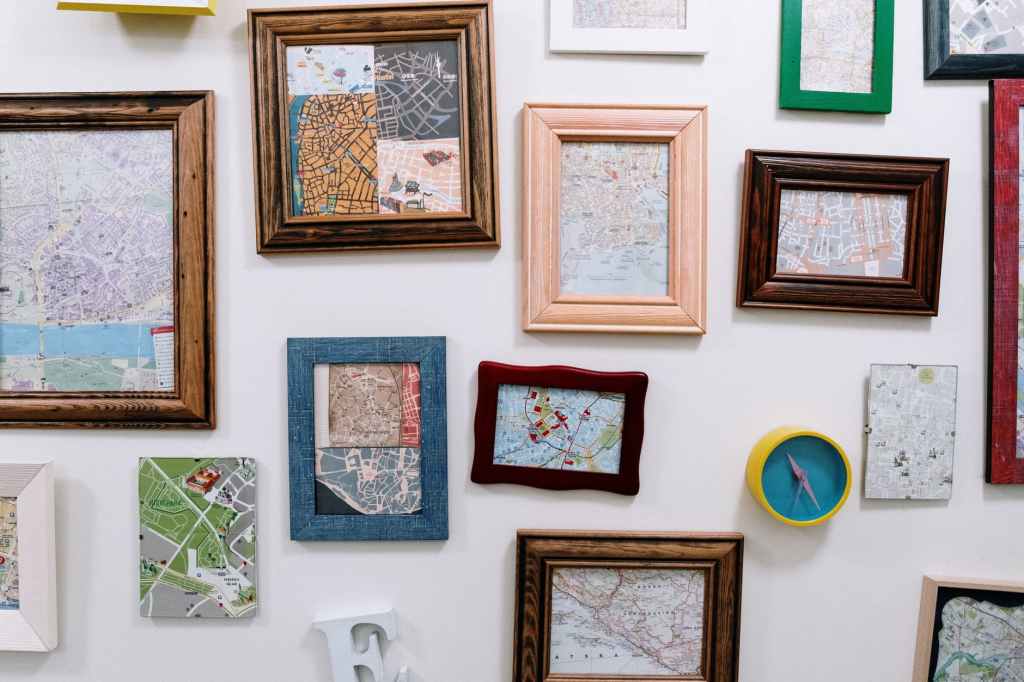
My own workshops went down a storm this year, with over 50 people taking part, from the Mental Health First Aid Awareness training, through to Are You Application Ready. The last one, Museum Mapping, was on the 22nd November and I’m working on a new series for 2023, including Carbon Literacy for Museums.
I’m also an Accreditation Mentor, so if your museum is about to start working towards, or will be renewing your accreditation status and would like some free support, contact me for more information.
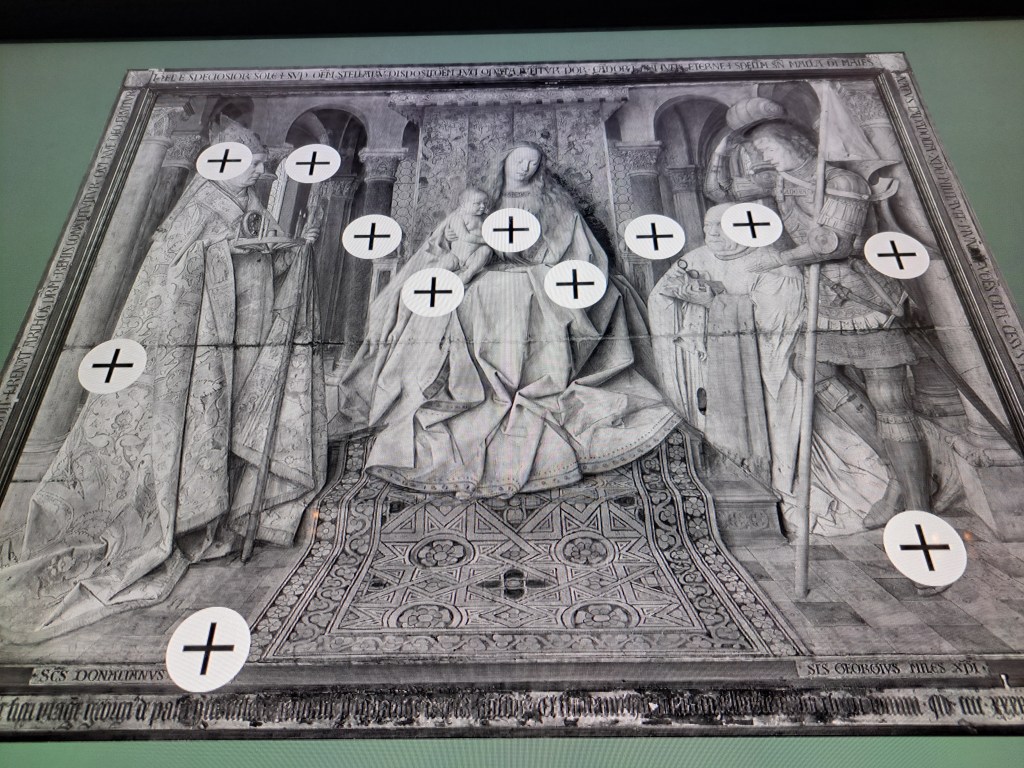
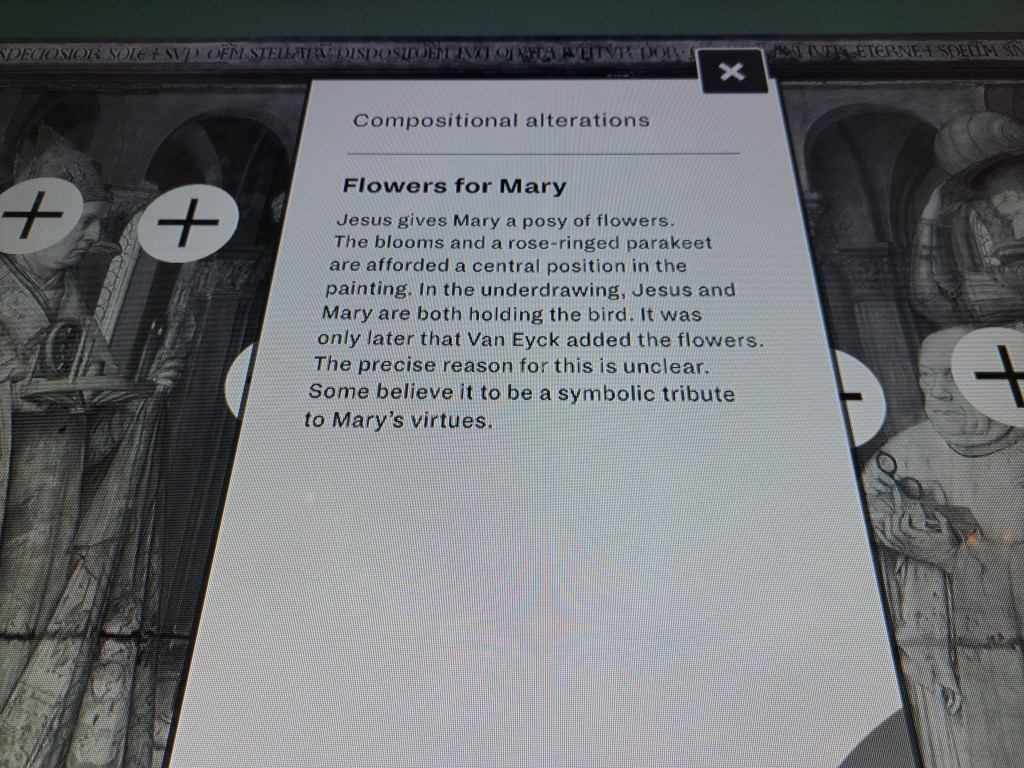
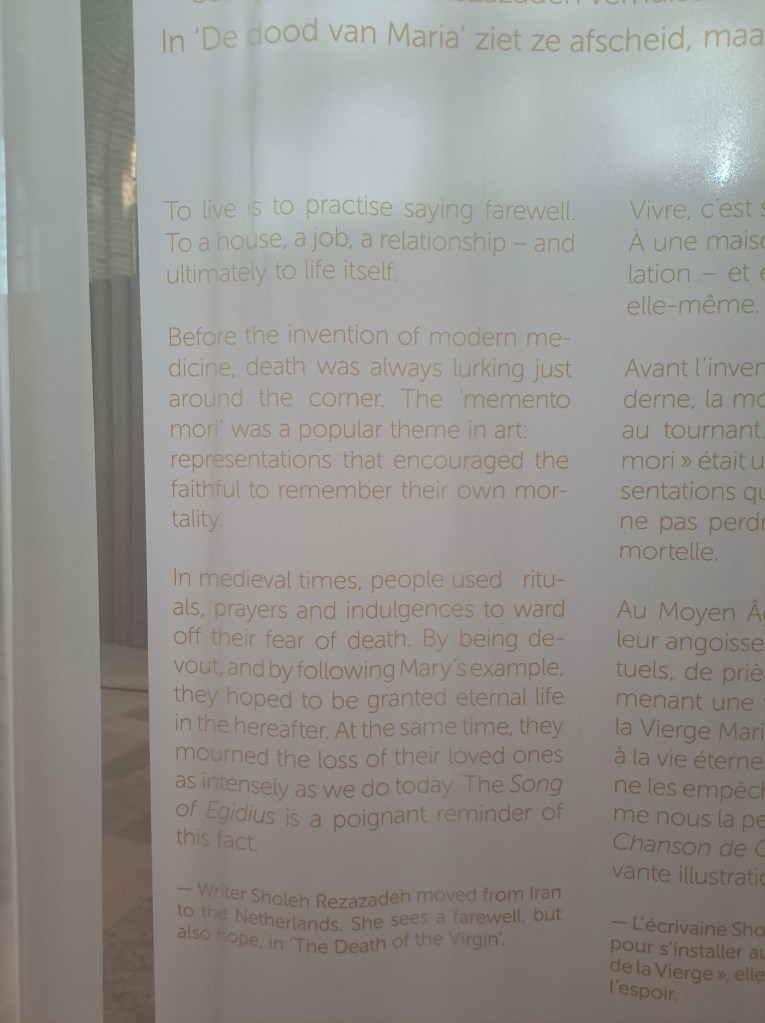
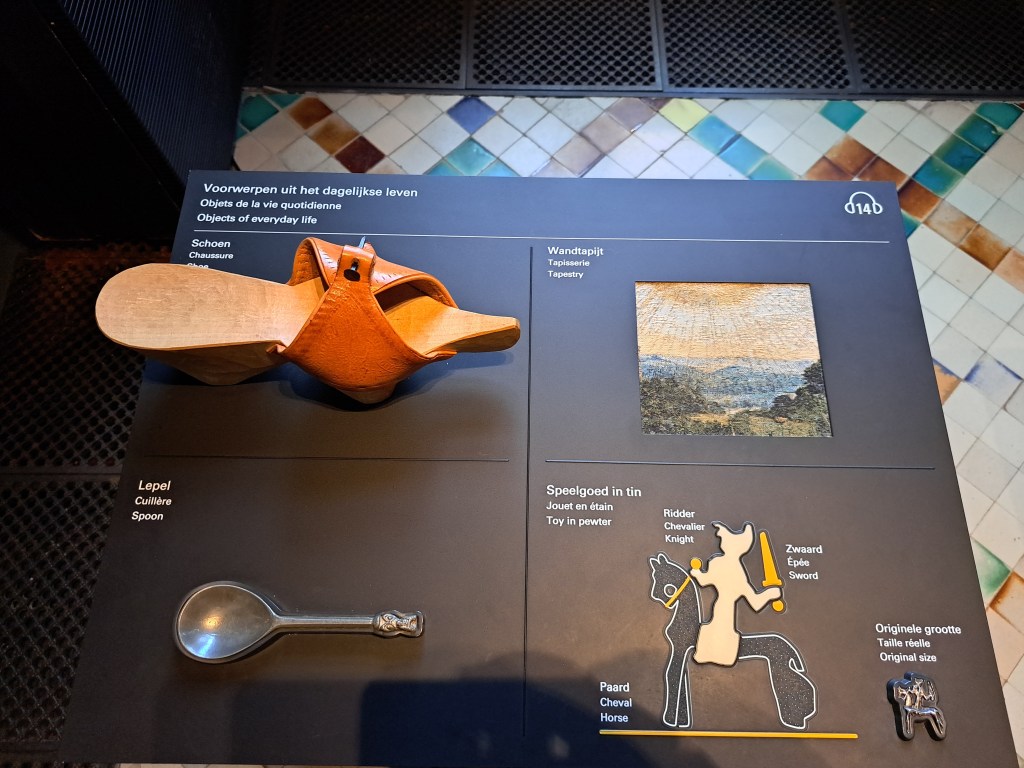
Finally, all of the images in this post were taken on my recent trip to Bruges where I got to see incredible art and the most wonderful exhibitions. Interestingly, each and every piece of text (fixed or temporary) was in at least 3 or 4 languages: Flemish, French, Spanish (or German) and English. It was a real eye-opener, given how little we do that over here. Something I’ll be getting clients to consider in the future.
I’ll be finishing up this year on the 21st December and back at my desk on 4th January. In the meantime, I wish you all a wonderful festive break!
Ah September. With it’s innate back-to-school feeling, memories of new shoes, the smell of a new pencil case, it’s a month to make you wistful. Or not, depending on if you enjoyed school.
A confession: I did not. Not very much. But I did enjoy the new shoes and the new pencil case. Whilst the shoes now may be a pair of Supergas and the pencil case might come from Muji, that feeling of a new start lingers in us all.
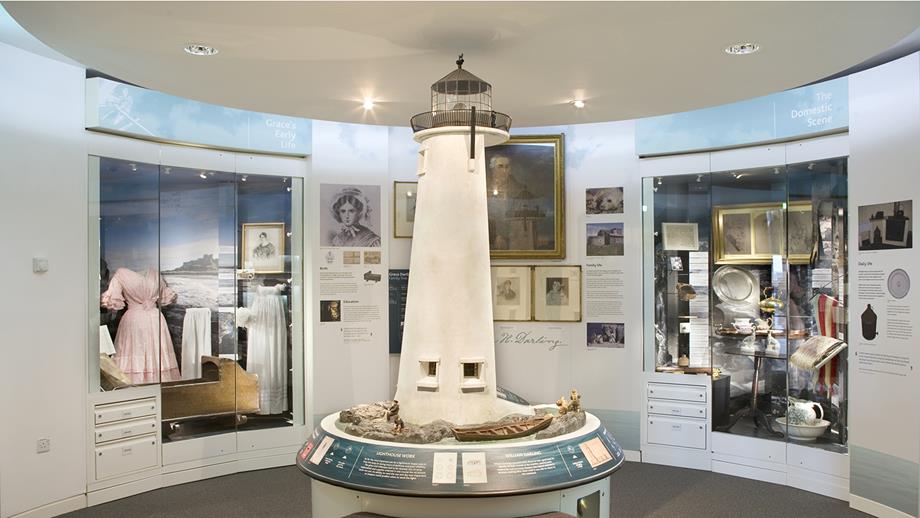
I’m recently back from a break in Northumberland where we visited the excellent Grace Darling museum in Bamburgh, which – although small – was full of personal items alongside the well presented biography of her short life and the actual boat used in the daring rescue. There were a number of well done, low-ish tech activities that were engaging and joyful for participants of all ages. On one where, by selecting the correct steps in preparing a lighthouse for use, you could make it light up the whole room, I saw at least 3 older adults trying to do just that: they were all laughing and enjoying themselves hugely.
That lighthouse: the room is quite dim in real life, so the light coming on is a real moment (image credit: RNLI)
It was a lesson in how interactives can bring about joy without costing a huge fortune and without being digital, something that has been much on my mind as I’m working with a client on a reinterpretation plan.
There is a big push for digital tech in our interactives these days, and I get why. It’s often new and exciting and can be really effective. Plus, we’ve convinced ourselves that it’s only by providing lots of screens that we can get children and young people engaged.
But it can also be overly complicated, expensive to maintain and repair, and out of keeping. I’ve lost count of the number of whizzy once-new interactive touch tables that are now gathering dust with signs on them asking visitors not to touch. These were purchased in the heady days of R&D funding, only to break within 12 months of repeated use. Now, the repairs are too costly for our budgets and the tech is obsolete.
An outdoor map at Lindisfarne. I can see what they’re trying to do – recreate the feel of old parchment – but it’s almost impossible to read. Image credit: Collett Consultancy
I’ve also found that it’s not the type of interactive that encourages real engagement, stimulating deeper connections than merely pressing a button will. In my work, I’m more likely to see children focused and intent on something beautifully illustrated, hands-on and creative. That lighthouse, for example. The gargoyles at Gloucester Cathedral. Pretty much anything in the ThinkTank MiniBrum gallery.
I am also more likely to see inter-generational engagement – elders working with children and young people – on an interactive that requires fine motor skills or logic steps. If you turn this wheel, these things will move. If you slot these pieces together in the right order, this will reveal itself. Automaton can be beautiful and fascinating. Where I don’t see it are on the ones where the activity is screen based.
Digital tech absolutely has its place and can be wonderful, but before we all rush to incorporate it, we really need to ask ourselves if it’s right for our museum. Better still, ask our audiences, our visitors. What do they like? Build in end-user evaluation and testing throughout. Check that it will withstand a toddler repeatedly smacking it with a beaker or an accidental spill from a water bottle! Is it easy enough for those not tech-savvy to use? Bring your grandad in to have a go!
Lindisfarne Priory: simple but effective. Easily updated, cleaned and maintained. I had to wait 5 minutes to get anywhere near it. Image credit: Collett Consultancy.
And don’t forget to check how often this software is going to need updating. How easy will it be for you to update or make changes to it, or will you have to call in the tech company each time (and pay their fees)? How long is the warranty? Can you create a budget just for the ongoing maintenance costs?
Whilst there is a temptation to think of digital tech as being “better for the environment” than standard interpretation boards or hands-on interactives, that may not necessarily be the case. They require electricity to power them (at a time of rocketing energy prices) and can be energy heavy during their production. Add to that the fact that digital tech is more likely to become obsolete and spend a longer period of time mouldering away, unused, in a cupboard, then they are very far from being carbon-neutral. Up against an activity carved from wood felled within a 10 mile radius that will last for over 5 years without additional energy requirements, the tech simply isn’t green.
There is no right or wrong way forward. The planning stage of a reinterpretation strategy is the best time to consider this, to do the research on your audience, to ask them what they like when they visit places. Go and visit other museums, take a look at what they’ve got that’s got their visitors engaged. And if your heart is set on something whizzy and new, test, test and test again!
And finally, a word on QR codes. They are absolutely the best for encouraging deep dives into the history and they fit nicely on a standard interpretation board but they are also next to useless unless you provide the free WiFi necessary to use them. People are increasingly reluctant to use their own data and, often, a mobile signal won’t get through the walls of an old building. I once spent 5 minutes trying to get a QR code to work in Worcester Cathedral before giving up on all of them. Still committed to your QR codes? Free the WiFi!
…we’re in the last throws of June! The past 2 months have been so busy I’ve had to leave my website and blog to their own devices. And my own advice to take time for myself, be mindful of my own capacity went right out of the window! I have vowed to be better at practising what I preach and in that spirit, I’ve pressed pause on my workshop schedule until later this year.
In amongst all that busyness, I completely forgot that I passed an important milestone in April – 1 year successfully self-employed! Yes, my little consultancy is 12 months old, although it feels both as though it is still brand new and as though I’ve been doing this forever at the same time. Which in a way I had.
It’s 20 years ago now that I made a sideways move into the heritage sector, starting off as a lowly museum assistant in the Almonry Museum in Evesham. That beautiful 14th Century building and it’s eclectic collection utterly captured me and I decided this was the place, the industry, I could call my “work home”.
I left there after 8 years having successfully written a £1.4 million bid to the Heritage Fund, raised visitor numbers and profile, improved collection care and steered it through Accreditation, twice. We can neglect to shout about our achievements, and it’s good to take stock of them every now and then. Consider this my shout!
Prior to the Almonry, I hadn’t worked in heritage at all. I had no experience of it beyond being a visitor. But I had worked in finance, hospitality, sales and education, so I was bringing to the table a whole range of skills that proved invaluable.
Recently, I’ve been delivering some training for Share Museums East and a topic we’ve dealt with is diversity in the workplace. How do we stop our teams being homogenous, unrepresentative, filled with the same sort of people with the same sort of ideas? The answer is relatively simple: we open ourselves to new approaches.
It was only because the team at the Almonry were willing to take a chance on someone with no experience in the sector that I got the job and yet so often I see job descriptions asking for ‘relevant experience’ which automatically brings the assumption of relevant museum experience. That caveat immediately limits who will apply for the role, which in turn limits the candidates who will apply and, finally, limits our opportunities to bring new thinking to the room.
When we draft that next role description, have yet another discussion about recruitment, we should ask ourselves if we are just aiming for the low hanging fruit, i.e. the people we know will ‘fit in’ with the team. Or are we willing to work a little harder, aim a little higher and bring some real change to our organisations?
New ideas bring new life to an organisation. It can be challenging but it can also create new synergies that, in turn, create new ways of growing our organisations, making it more resilient. Why wouldn’t we want to embrace that?
As I mentioned at the beginning, my workshop schedule is on pause so I can focus on clients over the summer. I am going to be reducing my hours right back in September as the wedding date looms large, but the workshops will be back in October with some old favourites and some new ones to whet the appetite. My newsletter will go out in mid-July with more information, so if you want to be in the know, email me at tcollettconsultancy[@]gmail.com to be added to the mailing list.
Have a wonderful summer. May your visitor numbers be healthy, your volunteer rota full and your board happy. Remember to take some time off for yourself too!
If you have been lucky enough, as we have in the Midlands, to have had the past few days bright and clear, it really does feel like Spring has finally arrived (I know Winter only lasts the usual months but sometimes it feels longer). At the allotment, things are springing up all over the place and it feels like the same energy has transferred to my clients!
Yesterday, we ran the final Mental Health First Aid for Museum Professionals workshop. This was a half-day workshop, certified by Mental Health First Aid England, lead by Dawn Collins. I’ve found these sessions absolutely fascinating and am so glad they’ve had the take up they have.
I now feel better equipped to spot the signs of distress and mental health decline, in colleagues as well as clients; how to create a safe space to talk in; how to broach that conversation in the first place; and, most importantly, how to support someone through the process to better mental health. I’ll certainly be using that knowledge to develop resources for clients, draft policies and resources you’ll be able to download from the website.
Now certified MHFA Aware
My next workshop, Are You Application Ready?, has sold out, which is fantastic! That’s the last workshop I’ll be running in this quarter. Work for clients will take priority during the next quarter, so my next set of workshops won’t be until July.
Speaking of clients, I’m very pleased to be working with Hundred Heroines to develop some grant applications for them, and with Share Museums East to deliver the programme “Taking the Mystery out of Diversity”. I love Norfolk, so can’t wait for the chance to travel over and meet the SME team again.
I’ll leave you now with an exercise learned at the MHFA training. Designed to reduce stress, calm the adrenaline that surges when we’re on the verge of a panic attack, or simply to give you a moment to meditate without the need for complete quiet or breathing techniques. It really resonated with me and is something I’ll certainly be adopting in the future. Why not try it now?
Simply: close your eyes and picture your happy place. Somewhere you love being, outside, in nature. It could be a beach, a forest, the top of a hill or just your garden. Got the image? Now, list:
4 things you can see
3 things you can touch
2 things you can hear
1 thing you can taste/smell
Simple. 4-3-2-1 from your happy place. I hope you find it as helpful as I did.
Last October, I posted a quick Dos and Don’ts Guide to managing your grant, inspired by my experiences running the grants admin for AIM. Talking to projects that had been funded, and more widely within my network, I realise we’ve now reached the point where we fling out applications willy nilly, almost a Pavlovian response to news of a new grant scheme.
Isn’t that exhausting? How often are you scoring a hit with those applications? And just how much of your time is that taking up? Be honest! More time than you really want to admit to. We’ve all taken applications home to ‘have a quick look at it’. And that quick look turns into hours of work when you could be switching off.
So before you reach for the next funding application, why not stop and consider the following:
Do you have a project in mind?
Is that project a good fit for your museum?
Is it a good fit for the potential funder’s aims?
Does the project have the support of your team?
I was recently advising a client about their next grant application and asking them exactly those questions. When we hit a ‘No’ answer, we worked out ways to help them reach a ‘Yes’. By the end of the session, they were in a better place to start working on an application: the project was defined, it had the support and, more importantly, it was a good fit for the funder. We’d avoided the dreaded Cinderella’s Shoe syndrome!
This year, to help more organisations get themselves application ready, and to build on my 2022 motto of “Work Better”, I’ve developed a workshop for museums, designed to help them map their way through the application process. From that first glimmer of a thought of a project, through to pressing submit on the application.
We’ll be looking at those crucial first questions, assessing your’s and the museum’s capacity, matching your aims with funder outcomes, and how to plan for managing a grant once you get it. At the end, you’ll have a guide to not only planning your next application, but also how to effectively manage it once you’ve got that crucial “grant awarded” notification!
The first workshop will be on 29th March at 10.30am and costs £30 per person. A workbook resource will be emailed to you as part of the workshop. You can book by emailing me direct (tcollettconsultancy[@]gmail.com), by filling in the contact form, or by clicking on this Eventbrite link. Individual organisation or person sessions can be arranged.
Prefer to listen to this as a podcast? You can find it on anchor.fm.
I’ve been quite cautious about wishing people a happy new year. There was a lot of celebrating when 2021 dawned and promises that it was going to be the best year ever and then, well, the year unfolded the way it did.
I’m trying not to put too much pressure on this new year.
What I am wishing people is balance. This feels like a very important thing to be working towards this year. In my own case, I’m moving to create more online resources, training and materials to support museum professionals who, from the ones I’ve been speaking to, are feeling completely battered by the past 2 years.
This, obviously, starts with the first, in what I’ll hope will be a recurring programme, Mental Health First Aid for Museum Professionals workshops. Each stand-alone session will equip attendees with the knowledge, skills and resources they need to look after themselves and their teams.
I’ll follow this up with some online resources that support that learning and help you achieve a better working situation, including my new Guidance sessions (more on those another time). I want to help us work better.
And for myself? I’ll be putting what I preach into practice, starting by actually going out and visiting some museums this year (2021 was mostly about heritage sites and gallery visits!), not just reading the theory and Zooming around the country. The recent televised archeaological finds have reignited my love for paleontology and natural history collections, so Oxford and the Lapworth can expect a visit, at the very least!
I’m also doing more writing, including copywriting for websites, which I just LOVE, so I’m keen to build that side of things up. Spending all day with a blank page and a good supply of coffee? Heaven.
Whatever 2022 has instore for you already, I wish you balance.
Dinosaurs at the magnificent Lapworth at Birmingham University. More of this in 2022 please!









 The Collett Consultancy